

 Denzel Maniple Everd
Bobi Wine: The People’s President – Reflective Paper
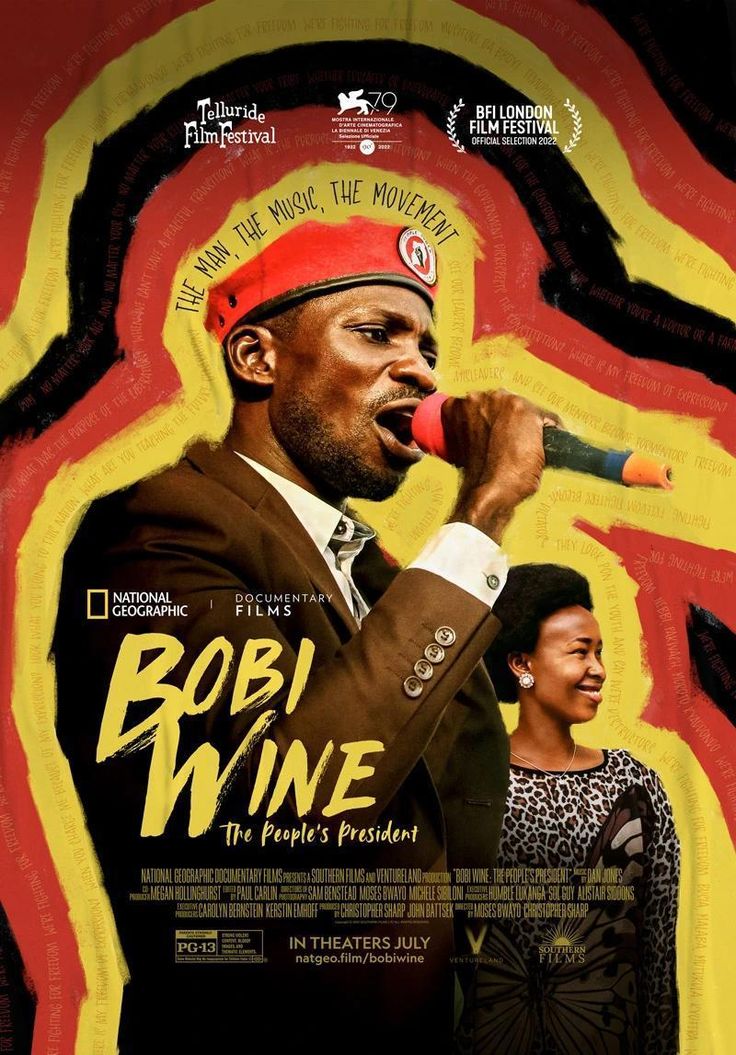
Directors: Moses Bwayo and Christopher Sharp
Producers: Christopher Sharp and John Battsek
Introduction
Bobi Wine: The People’s President is a gripping and technically accomplished documentary that chronicles the transformation of Robert Kyagulanyi a.k.a Bobi Wine from Reggae and Afrobeat star to husband, to political leader in Uganda. Threaded throughout the narrative is the repeated assertion: “I am not a criminal. I am a Presidential candidate.” This statement functions as a defence against false accusations and a declaration of intent. It is a protest against state labelling and a reaffirmation of democratic legitimacy. While the film succeeds as an emotionally compelling and visually immersive piece of cinema, it also reveals how documentary filmmaking can shape political memory through selective framing and narrative control.
The Title: “The People’s President”
The title is powerful and aspirational. Throughout the documentary, Bobi Wine is portrayed as the embodiment of the Ugandan people’s frustrations, especially the underprivileged youth who have known only one president in their lifetime. Massive crowds, chants of solidarity, and scenes of traumatizing police brutality as a curb to Bobi Wine’s influence reinforce the image of a leader carried by public will. In this sense, the title aptly captures the film’s thematic intent.
The film frames Bobi Wine as the moral heart of Uganda’s democratic struggle. He places himself as the people’s mouthpiece by constantly questioning the current Head-Of-State about his ethics. “What happened to you, President Museveni? You were once my hero!” This framing is effective in raising the outstanding issue of the president’s extended stay in power, despite claiming that Africa’s biggest problem is leaders who stay too long in power back in 1986. It also simplifies a complex political environment into a story of one man’s struggle for freedom from a tyrannical dictatorship.
The excellence of the Visuals, Sound, and Editing
The film is described as “Sobering and Enlightening” (Rotten Tomatoes, 2024), and this description aptly describes the documentary.
Visuals:
The documentary relies heavily on handheld footage, archival recordings, and on-the-ground documentation of protests, arrests, and candid moments of Bobi Wine’s family as they navigate this intense political environment. Tear gas clouds, chaotic crowd dispersals, and visibly injured supporters create a raw immediacy that is difficult to dismiss. The visuals are incredibly well sourced, demonstrating extensive research into Bobi Wine’s political rise as well as the terrifying political landscape that is Uganda. The camera often stays close to faces, capturing fear, exhaustion, and determination, grounding the political narrative in human consequence. At the same time, what is shown is carefully curated. Visual storytelling, by nature, excludes as much as it includes, and as someone who lived through some of these events, it becomes clear that this film has a strong political agenda despite the truthful atmosphere it paints of Uganda’s politics.
Sound:
The sound design amplifies the emotional weight of the story. Clearly captured interviews of Bobi Wine and his family, chanting crowds, powerful statements from his supporters and opposers, aptly used silences and Bobi Wine’s own music function as narrative drivers and thematic reinforcers. His songs balance entertainment and protest anthems seamlessly, making their use in the film both artistically and thematically relevant. It highlights the merging of art and activism in Uganda. The layering of well-sourced news clips and live audio deepens the sense of urgency. Sound, in this documentary, is used as a tool of immersion and persuasion.
Editing:
The film’s greatest strength is its editing. The cuts are seamless, allowing the narrative to flow effortlessly across years of political upheaval. The pacing builds tension, and the colour grading is polished and cohesive. However, editing is also where the film’s political shaping becomes most evident.
As mentioned earlier, I am a Ugandan who lived through many of the documented events. I noticed significant omissions, particularly moments during the 2017 constitutional changes that paint Bobi Wine as purely peaceful. By surgically removing episodes of violent confrontation from his timeline, the film constructs a consistent image of moral heroism. This does not negate the suffering shown, but it does reveal how documentary editing can function as narrative advocacy. The film’s technical excellence becomes its most powerful political instrument as it shapes the political history of Uganda.
The Man, The Music, The Movement
The documentary intertwines three elements: the man, the music, and the movement.
The Man:
Bobi Wine is portrayed as an ambitious, loving and courageous family man: a calm but firm leader, and a victim of state oppression. The camera frequently humanizes him in moments with his wife, children, supporters, and the isolating trauma of imprisonment and state-sanctioned torture. Through these narrative tools, he becomes a political symbol across the globe.
The Music:
Music is depicted as the binding thread between Bobi Wine’s celebrity and activism. His songs evolve from cleverly veiled social commentary to explicit political resistance. His art becomes a mobilizing force, and his identity as an artist strengthens his connection to the youth and the general public.
The Movement:
The red berets, the youthful crowds, and the repeated confrontations with authority illustrate a generational hunger for change. The movement is portrayed as organic and emotionally driven. The film successfully captures the psychological toll of political struggle, the fear, the trauma, and the exhaustion experienced by ordinary Ugandans.
Despite my reservations about the film’s narrative selectivity, I could not ignore the real suffering it portrays. The trauma, the loss of life, and the instability are not fictional constructs, and even if emotions are weaponized for international sympathy, the pain itself is real. On several occasions, I was brought to tears with vivid memories of some of the events I was forced to re-live in the documentary.
Personal Reflection
Ultimately, the documentary awakened a deeper question for me: Has Uganda ever truly known freedom since independence, or has power merely transitioned from one strongman to another? While the film presents Bobi Wine as the antidote to dictatorship, it also reveals how political storytelling can construct heroes to fill national longing.
Bobi Wine: The People’s President is sobering because it reminds us of how flexible the truth can be in politically charged narratives. It is enlightening because of what it reveals and what it chooses to omit. As both a filmmaker and a Ugandan, I left the documentary emotionally moved, technically impressed, yet intellectually unsettled, questioning the subject of the film and the nature of freedom itself.
Written by Denzel Maniple Everd
This post was created with our nice and easy submission form. Create your post!

Written by
Storyteller, amateur poet and photographer (IG: @denzel_everd || @some_things_denzel_sees), and film-maker.
Did this story move you? Every gift goes directly to Denzel Maniple Everd — writers on Muwado earn from reader appreciation, not algorithms. Even $1 makes a difference.




Muwado weekly chart
Get Africa’s top 10 stories every Thursday
No account needed — just your email.
Want to follow Denzel Maniple Everd and get notified every time they publish?
Create a free Muwado account →