

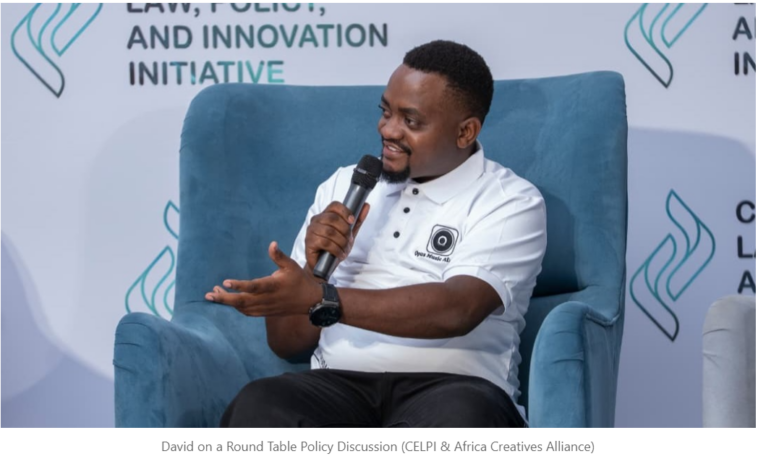
 Tayebwa David
For the past decade, the global narrative has been obsessed with the “African Sound.” From the rhythmic dominance of Afrobeats to the log-drum pulse of Amapiano, our culture is the world’s heartbeat. According to the IFPI Global Music Report 2026, Sub-Saharan Africa saw recorded music revenue growth of 15.2%, reaching over $120 million.
But while the world dances to our rhythm, a sobering question remains: Who owns the floor they are dancing on?
The Identity Crisis of “African” DSPs
As Diana Hopeson recently highlighted, the continent’s biggest streaming platform isn’t African. Boomplay, with its 100 million+ users, is a masterclass in localized strategy, but it is fundamentally a product of Chinese tech giants (NetEase and Transsion).
However, the problem goes deeper than just the “big” names. Consider Mdundo. To the average user in Kenya or Nigeria, Mdundo feels as local as a street-side kiosk. They solved the “low-data” barrier with a brilliant download-first model. Yet, Mdundo is headquartered in Denmark and listed on the Nasdaq First North in Copenhagen.
This is the great paradox of our “renaissance”: The platforms that have mastered Africa are often those that view Africa as a territory for extraction rather than a home for equity.
Why the “Outsiders” are Winning
We must be honest about what these entities have mastered:
The Hardware Hook: Boomplay didn’t fight for users; it arrived pre-installed on the Tecno and Infinix phones that dominate African pockets.
Low-Friction Consumption: Mdundo recognized that streaming is a luxury. They optimized for 2G/3G speeds and airtime billing.
Capital Access: While African founders struggle for “seed” rounds, these entities access European IPOs and Chinese venture capital.
The $2.5 Billion Leak
If the ownership of the platform is the “front door,” the ownership of the data is the “vault.”
Ivan Kifumba recently noted that $2.5 billion in royalties sits unclaimed globally because our metadata systems are broken. Our catalogues are only 40-60% complete. In simple terms: the machines that distribute the money literally do not know who made the music.
When an African artist streams on a non-African platform with incomplete metadata, the value doesn’t just “stay” elsewhere—it vanishes into a “Black Box.”
If we are to move from being “tenants” to “architects,” we must ask ourselves:
Why do we settle for “partnership” when we should be aiming for “infrastructure”?
Can a platform truly serve African interests if its primary fiduciary duty is to shareholders in Copenhagen or Hong Kong?
If 80% of African data sits on foreign servers, do we actually own our culture, or are we just leasing it back to ourselves?
Building the Backend for Sovereignty
At Opus Music Africa , we believe the next phase of the revolution isn’t about more songs—it’s about better systems. The call for homegrown DSPs is often met with the reality of technical failure. Local platforms struggle not because of a lack of vision, but because they lack the “backend” to compete.
We are quietly working to change that. We don’t believe in just talking about the problem; we believe in providing the tools to solve it. Through AiVA Rightshub, we are introducing services designed to escalate the growth of actual homegrown DSPs.
By providing robust metadata management, rights administration, and royalty tracking, we aim to give African-founded platforms the same technical precision as the global giants. We want to ensure that the next African-led DSP doesn’t fail because of a “metadata gap” or a “black box” royalty leak.
The goal isn’t just to build an app; it’s to build the Digital Sovereignty required to keep our value on the continent. The pipes must belong to the people who create the water.
The question is no longer “When will the world listen?” The question is “Who will own the ear?”
Stay tuned to “Re-imagining Music for Africa” as we explore the technical pillars of our industry’s future.
This post was created with our nice and easy submission form. Create your post!

Written by
I am a dedicated Music Entrepreneur and Rights Administrator on a mission to re-engineer the financial future of African creators.
Did this story move you? Every gift goes directly to Tayebwa David — writers on Muwado earn from reader appreciation, not algorithms. Even $1 makes a difference.






Muwado weekly chart
Get Africa’s top 10 stories every Thursday
No account needed — just your email.
Want to follow Tayebwa David and get notified every time they publish?
Create a free Muwado account →