

 Lutgard Musiime

“My child is just a picky eater.” I’ve heard this sentence countless times, and sometimes it’s true. But sometimes what looks like “picky eating” is actually a feeding difficulty.
The challenge is that many parents don’t know what to look for, and because feeding is something we expect every child to naturally learn, we often wait until meals become a daily battle before asking for help.
Here are 7 signs that your child may be experiencing a feeding difficulty.
1. Mealtimes are consistently stressful
Every meal feels like a negotiation, a struggle, or ends in tears for you, your child, or both. While all children have difficult days, dislike meals or get bored, they should be meals they enjoy but if every mealtime turns into persistent stress, that is very telling.
2. Your child coughs, chokes or gags frequently while eating or drinking
Occasional gagging is part of learning to eat. However, frequent coughing, choking or gagging may suggest difficulties with chewing, swallowing or safely managing food.
3. They only eat a very small variety of foods
Many children have favourites. But if your child eats only a handful of foods and strongly refuses almost everything else, there may be underlying sensory, oral motor or feeding challenges.
4. Meals take an unusually long time
If it regularly takes more than 45 minutes for your child to finish a meal, feeding may be requiring far more effort than it should.
5. Your child avoids certain food textures
Some children refuse foods that are crunchy, lumpy, chewy or mixed together.
This isn’t always “being difficult.” Sometimes it’s because those textures genuinely feel overwhelming to consume.
6. Eating seems painful or uncomfortable
Children who arch away from food, cry during meals, refuse to open their mouths or appear distressed may be trying to tell us something. Pain, discomfort or difficulty swallowing should never be ignored.
7. You’re constantly worried about whether they’re eating enough
Sometimes the first sign isn’t the child. It’s the caregiver.
If every meal leaves you anxious, exhausted or questioning whether your child is getting enough, it’s worth seeking support.
The most important thing is that a feeding difficulty is not a sign of poor parenting, and children with disabilities do not necessarily need “special foods.”
More often, they need the right support, the right strategies and people who understand how feeding skills develop. Early support can make mealtimes safer, less stressful and more enjoyable for everyone involved.
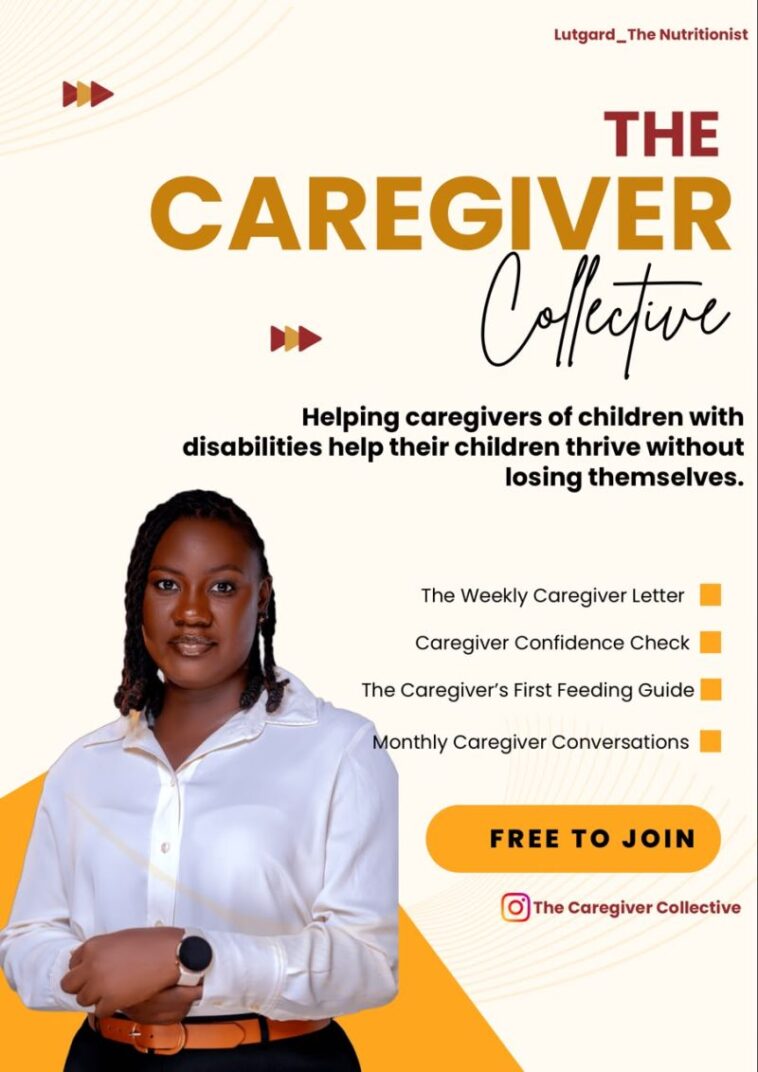
This is one of the reasons The Caregiver Collective is here, a free community where caregivers learn skills and strategies to support one another through the journey. The link to join the community is in the comments.
❤️ Which of these signs have you seen in children or families around you? I’d love to hear your thoughts.
This post was created with our nice and easy submission form. Create your post!

Written by
Public Health Nerd, Nutrition disability specialist, Nutrition master trainer, Author, Nutrition blogger, Speaker, entrepreneur
Did this story move you? Every gift goes directly to Lutgard Musiime — writers on Muwado earn from reader appreciation, not algorithms. Even $1 makes a difference.






Muwado weekly chart
Get Africa’s top 10 stories every Thursday
No account needed — just your email.
Want to follow Lutgard Musiime and get notified every time they publish?
Create a free Muwado account →