

 Caesar Obong Ng'bong ocen

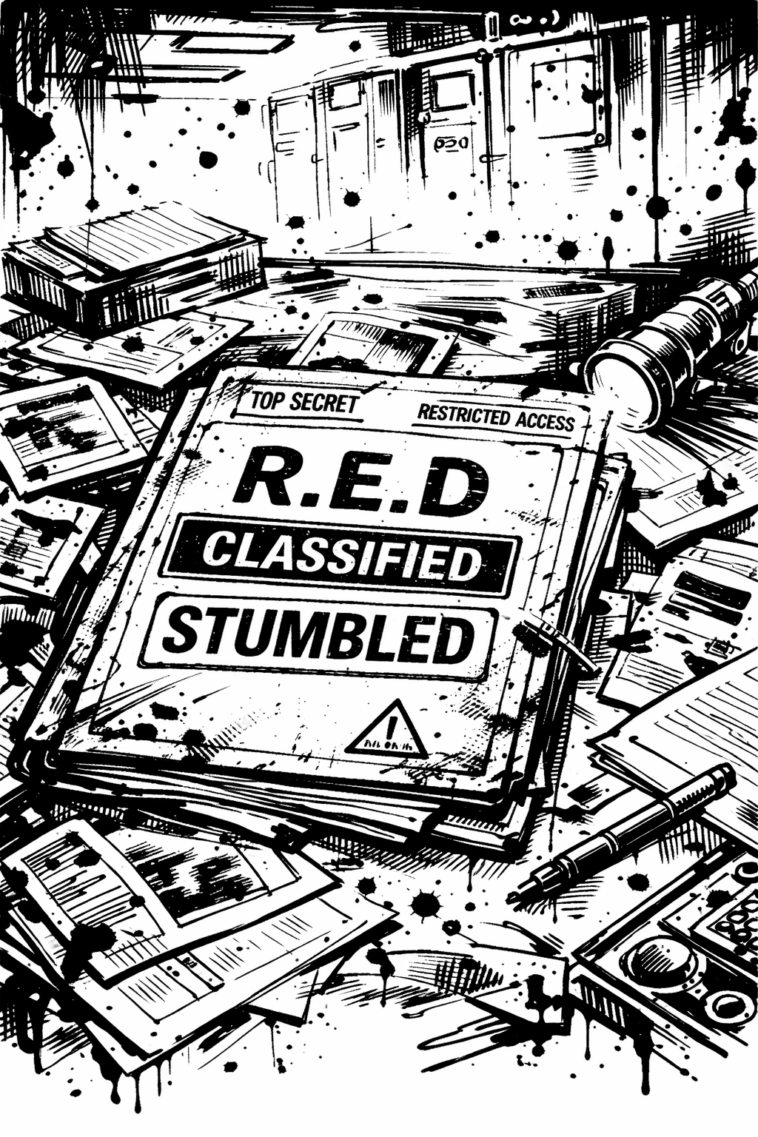
The archive in Bombo was not meant to be remembered. It was a place built to contained top military secrets, especially those labeled as Rated Externally Dangerous files or R.E.D. In bleeding letters. These were classified contents not meant to be unearthed or to be seen by anyone out of the authority that kept it there in the first place.
Private Isaac Lutaaya was an intern student from the military academy, he was assigned to this body of knowledge that houses top secrets within and out of Uganda. His work was simple, work under the supervision of an old librarian only known to many including me as muzei.
Because his work required record keeping and movements, he was assigned to a small 125 cc scooter to aid his movements to the various document centres within the central districts. No cameras or digital equipment’s equipped with cameras including wrist watches, cell phones, sunglasses, buttons and bracelets were accepted in the library room.
I understood that Isaac Lutaya carried his cell phone with him all the time into the library and without being question why or who sent you he became the authority and the existing danger alarming for the older generations like Muzei.
On that fateful morning when he made discovery of the Pubunngu files, the moment he stepped inside. The air carried a stillness that was not natural—it felt arranged, as though everything within the room had agreed long ago to remain undisturbed. Files leaned without collapsing. Dust hovered without settling. Even the steel door behind him refused to shut completely, as if the room preferred witnesses to pass through without finality.
He did not force it. It was tempting enough for him to begin documenting his work, the work that was never assigned to him by his superiors, and besides that the signpost at the entry said clearly cameras, buttons, sunglasses, smart watches and bracelets or any electronic or mechanical device recording or re generating images were prohibited beyond the entry point of the document house.
Instead of accepting the command at the entrance of the building, he reached into his pocket pulling out his smart phone and opening the camera application, he then pressed record.
The red dot blinked alive.
“Archive Bombo,” he whispered. “Pubunngu section… I don’t think anyone has opened this in years.”
The camera moved slowly across shelves of forgotten records until it stopped.
A thin folder.
Misplaced.
Unclaimed.
On its cover, in ink that had bled slightly into the paper:
POBUNNGO
The file did not explain itself.
It resisted explanation, besides that the person who had placed it there seems to have been in a hurry or perhaps did not know where to put it or perhaps something scared the hell out of him.
Private Isaac Lutaya angled his smart phone at an angle that made him continue with the recording of other contents including the torn uniforms of General Okello, Drake, Felix and Maggie, each box had a story to tell which was never publicized. Then there were two more boxes the one that drew his attention the most, one was clearly labeled Mary Mwaibako its content was emptied except a paper with no visible inking on it and the other was labeled Peter Kaburu.
Inside Peter Kaburu’s box were fragments—testimonies that did not align, photograph of mysterious earth formations and geographical maps, of objects that defy natural laws and land formations that made no sense to ordinary humans, yet pointed toward a shared disturbance.
“…we were advancing…”
“…no command was given…”
“…something corrected us…”
Isaac frowned.
“Correction,” he whispered. “Not attack.” He squinted his eyes as if he had overheard something from within the lonely empty rooms of him and the books.
He turned the pages, his hands trembling slightly at the classified artefacts as if reading a documented horror.
A stamped classification emerged:
ARTEFACT CLASSIFICATION
Object: Staff (QASHQASH)
Status: Unsecured
Countermeasure: Broken Lance (Incomplete)
Isaac exhaled slowly.
“This is real.”
Within Peter Kaburu’s items, which lay as a witness file was a large trunk, inside lay smaller boxes, some were compact and heavy, this box lay behind the file.
Unlabelled.
Unregistered.
He pulled it forward.
Inside lay remnants that did not belong to storage—but to interruption.
Some content included a folded camouflage combat uniforms, a pair of pistols in their holsters, a dis assembled black wizard rifles, six empty sells, a new pair of boots and stockings. These were in a separate box bundled as one
Them a broken radio in its own box.
Warped notebooks sat alone properly protected from the elements and dust by a polythene sheet wrapped over and over again.
And beneath them in another box protected in soft form was something wrapped with care—
A Canon camera.
Isaac lifted it gently.
There was a name on it.
PETER KABURU
“Okello’s boy… Mr Cameraman…”
The name had existed before in fragments. Now it had weight.
Beneath the camera were photographs.
Isaac spread them out.
Four 110cc jeeps.
Destroyed.
Not crashed.
Stopped.
Metal twisted with deliberate force.
“These weren’t accidents,” he murmured.
Another photograph was of Peter Kaburu wearing a military attire holding a camera.
Beside him—a woman.
Still.
Composed.
Close enough not to require introduction.
Isaac leaned closer.
He knew her.
He turned on the Canon camera.
The footage began.
The cameraman was standing on dry land.
That was certain.
Dust, scattered debris, the uneven texture of earth—everything confirmed it.
And yet—
Above him—
Some five or six meters high—
Water flowed.
Not suspended.
Not contained.
Flowing.
A continuous current moving across open air, forming a ceiling where none should exist.
Within that current—
Fully submerged—
The Staff and the Broken Lance.
The Staff remained perfectly horizontal, unmoving, as if it dictated the current itself.
The Broken Lance, fractured and incomplete, resisted—subtly disrupting the flow.
Fish swimming in perfect circle around the staff and the lance, within the water above created such an illusion.
Alive and not afraid.
Below—
The land remained dry.
No droplets fell.
No mist formed.
No sound connected the two.
Isaac leaned closer.
“This was taken underwater…”
A pause.
“But it wasn’t.”
The truth remains that Peter Kaburu had rested the Camera on his belly to avoid suspicion from the monkey king, this act tilted the camera forty-five degrees upwards deliberately…
Then rotated his body slowly becoming a natural tripod stand.
His bravery revealed to us a detail world beneath a section of river Nile somewhere between Karuma and Pakwach Bridge,
These details included an amphitheatre look alike.
A wide, structured depression with rising tiers carved into the earth. Not natural erosion—but design. A theatre built for observation.
A place where something was meant to be seen.
Above it—a flowing river formed the ceiling, a beautiful scenery, naturally and not visible anywhere else, it looks more like a moving sky of water and all its life forms.
At its center— there was;
The Staff.
The Lance completely broken into two equal parts and the distortion around it as if frozen in time.
Isaac’s voice dropped.
“This is controlled.”
The camera continued its slow rotation.
Then—
Stopped.
On one side—
A figure stood.
Mary Mwaibako smiling.
Dressed in full military uniform.
Her pistols rested in their holsters—secured, balanced, untouched.
Her posture was composed.
Deliberate.
She did not react.
She did not observe.
She belonged.
Elsewhere—
The monkey remained on its throne.
Still.
Untouched.
Observing.
For a moment—
The water above trembled.
The flow hesitated.
The fish scattered slightly.
Then— Order returned.
The footage cut.
Isaac sat back.
At this moment Isaac stopped filming and rearranged the items in the box back, Kaburu’s camera never left the room or its box but its content went into another man’s achieve, and this man would soon be reckless with this information, he would later inflict damage upon the journalistic profession to which some of us lived in. That is because he used a wrong domain in sighting the wrong people to accept wrong answers as truth and besides that giving them the platform to plant their fictitious, malicious ideas into documented truth.
That was when the understanding shifted. After work Private Isaac Lutaya retired home as usual, stopping briefly at a treading center where he drunk a bottle of Nile beer and then continued on with his ride home on his 125cc scooter.
Latter on at night he began to share information he had recorded from a secret R.E.D files with someone from his whatsapp group, this was dangerous because it was this person that would later post this into a social media platform claiming knowledge on the unseen natural barrier. Not the artefact this person had gathered millions of followers as a paid blogger;
The knowledge.
He posted that night.
Fragments.
Clips.
Names.
The likes came then the followers.
Then the silence that watched.
Peter Kaburu was still alive.
A storyteller.
A freelance journalist.
A man who documented what others avoided. Yet the blogging tongue painted both him and his girlfriend with malicious language, the blogger was dangerously evil breaking all rules of journalism.
To Peter Kaburu, the Murchison Falls expedition had been his largest.
Well-funded and yet he knew nothing about its funding, that was because after such a huge revenue entering into the Government coffers care has to be taken in revealing where it came from and more so who must have a share and perhaps what share of the said share should he receive, General Okello knew these protocol quite well and so he kept his cool and so did I and the entire team.
Beyond our team were Officials from the various ministries responsible for geological, wildlife, astronomical and health.
These four ranked men took the profits to another level.
Okello and his men received nothing during these time especially after the invisible lashes suffered in the depth of the jungle, some treated their wounds behind bars in safe houses while others were left to mingle around with civilians because they were never part of the intended military life blood.
The detention or erasure were part of the drill but not intended for evil deeds.
Not for failure— but for knowledge and safety of the Ugandan image.
Isaac who was naïve of the laws governing mass media and communication, had not meant to uncover what he uncovered by linking;
The camera—
The archive—
The footage—
He had connected Bombo to Murchison Falls.
He had exposed more than artefacts.
That evening, he went to the church.
General Okello’s church.
He sat beside Mary Mwaibako and Peter Kaburu wanting to ask questions about his finding on the subject regarded as
R.E.D Confidential.
Where their names are mentioned but Kaburu was not having his camera as usual and instead he used a small handheld cam coder both couples paid no attention to him and kept to themselves as if signaling in body language that you are playing with fire.
They did not look at him or even speak to him at any given time.
They just looked forward, attention was always focused on the sermon.
Watching.
“You know,” Isaac whispered scrunching his head but without clear obstruction from the couple this could have been his last, it seems the couple were hiding something heavier than life its self and since there was no response from the couple he let them be.
Two nights passed, swiftly with maximum precision, Private Isaac Lutaya continued his work as usual between courtrooms of makindye, Naguru, Mbuya, Luzira and the Library document house in Bombo. Caring on his work as usual like a work horse, He reported to his work station in Bombo on time and left office after sunset having completed his work not knowing that he had become as one of the most monitored figures in Uganda. And he had been marked. The young officer with a Honder 125cc motorbike.
On that fateful evening on his way home, he felt the unusual, smell of burnt meat cough his nostrils, not long after he felt his body filling tired and later on as he was idling his bike getting ready to go home a vision of him being shot on the chest by two men on the Bajaj boxer 110cc motorbike came to pass.
Taking it lightly he mounted his phone on the bikes and began recording as the engine roared on the Bombo highway, riding between 65 to 75 km and recording every bit as the engine roared on.
“I think I understand now,” he said.
“It’s not the Staff…”
He pause for a moment then he continued.
“bit it’s knowing where it is.”
The road stretched toward Milo Munana, dark and uneven.
Another engine appeared behind him.ß
Closer.
Two men.
Silent.
Pr,ecise.
The first shot cracked the night.
Isaac lost control.
The bike skidded.
Metal screamed against the road.
The phone fell—
Still recording.
He tried to rise.
The second shot.
Closer.
“If anyone finds—”
The third ended it.
Silence returned.
Two witnesses saw it.
A roadside vendor and a resting rider.
They did not move as the men approached them, lifeless body lying in a pool of blood by the roadside but the witnesses that had seen the action.
These killers approached them and asked if they had seen anything unusual to which the resting rider said “Nothing happened.” While the lady who was roasting maize by the roadside remained true to her work only shaking off her head.
Later— they were taken into a room to account for the eye witness but the rider argued that it was dark and they saw nothing, the roadside vender needed hearing aid so she was taken to a liability in the witness case.
“You saw nothing and you know nothing and that is what pays.” The plain clothed officer said in a law voice.
An envelope was placed before them.
“Take it.”
Hesitation took the form for the rider but more words followed from the one giving the brown envelop. He continued in a soft tone
“Life imprisonment, or death may result in you knowing too much.” This words did not settle well on the rider’s ears so he took the money and speeded off towards Woblenzi trading centre. He had seen the killer and they had paid him to keep him mouth shut.
As the unknown rider rode he remembered the killers voice perfectly “That man died for interference in a classified matter.” That word ended everything.
He had eaten blood money.
By morning
The road was clean.
The motorbike gone.
The body removed.
Back in Bombo—
The Canon camera remained.
Untouched.
Because the men who killed Isaac Lutaaya were not protecting the artefacts.
They were protecting its location.
And if Peter Kaburu ever returned or if he is to asked the right question—
If Okello… Drake… or Maggie followed—
Then what had been contained—
Would no longer remain in Bombo.
Yet now these artefacts faced a new problem
“Public Reckoning.”
The story did not end at Milo Munana.
It continued spreading like wild fire through its social media blogs.
By morning, fragments of the incident had surfaced online.
An independent news platform—small, aggressive, and hungry for relevance—began publishing what it called a “live reconstruction” of Private Isaac Lutaaya final hours.
They had his posts.
His clips.
His voice.
They did not have his understanding.
The first report was cautious.
The second was speculative.
By the third—
It had become something else entirely.
Mary Mwaibako was named.
Not as a witness.
Not as a participant.
But as something else.
“Mami Wata.”
The label was spreading faster than the footage.
Faster than fact.
Faster than correction.
The articles became bolder.
More certain.
Less careful.
They claimed she had been present at every unexplained event.
That those who encountered her did not remain unchanged.
That those who pursued her—
Did not return the same.
Then came the older story.
A man who was named as Mr Tumbo.
It was said that he had once abducted her against her will.
Held her captive for days until something happened.
The reports did not agree on what Mr Tumbo saw but only the outcome.
Because social media gives the person the ability to comment, the discussant others claim out of pure fiction that they had seen her turn into snakes and dangerous animals like lions and leopards. Whatever the bloggers said and private Lutaya account of the box being placed like who ever had placed the box and its contents were in a hurry or where under some force and why four pairs of uniforms were damaged beyond recognitions. Others suggested that this woman killed and swallowed her victims alive.
Another post talked of the last account of Private Isaac Lutaya saying something was supernatural was chasing him and ended up killing him on the spot.
The one that talked of Mr Tumbo says he had not returned as himself.
And now lived in a mental institution.
Silent.
Unresponsive.
Broken.
Then they linked it—
To Isaac Lutaaya.
“Another man,” they wrote,
“Who sought to expose her—?”
“Now dead.”
Mary Mwaibako was no longer a person.
She was a pattern.
A bringer of death.
A keeper of secrets.
Some articles went further.
Too far.
They accused her of worship.
Of allegiance.
Of something primitive, distorted, and sensational.
An orang-utan.
No evidence.
No restraint.
Only reach.
The damage was immediate.
People who once sat beside her—
Moved away.
Conversations stopped when she entered.
Silence followed her more closely than before.
Peter Kaburu read everything.
Quietly.
Carefully.
He did not respond.
Not because he agreed—
But because he understood something the platform did not.
Attention feeds distortion.
And distortion was already out of control.
But from the team’s side, none of them spoke.
Not Peter. Not Okello. Not Drake. Not Felix. Not Maggie.
Even after Lutaaya death they contained the silence, even after the accusations, they still remained silent. Perhaps the intelligence training had enabled them to remain silent
Not out of weakness.
But containment.
Because truth—
Uncontrolled—
Would do more damage than the lies.
Drake and Felix had already been released from the safe house by this time which only fuelled the rumour circulating from the social media.
Maggie continued her role beside Pastor Okello as the over seer of the church and Mary remained a usual Christian in the church. Drake stills hides in the chore despite the fact that he really sings.
Felix is still Composed
Present.
But no longer untouched.
Then came the Televised Clarification of the account of the Pubunngu files. These happened due to the mounting pressure from the bloggers who began touching on some sensitive information’s affecting ministries and the Ugandan wild life. I was to answer questions regarding certain articles to which I was to protect the governments to avoid political or social turmoil’s.
So later that evening, I was invited to a live talk show on national television regarding Uganda’s unclaimed resources and hot spot…
The studio was bright.
Cameras unblinking.
Audience both present and virtual.
Mary Mwaibako sat beside me, dressed in civilian clothes—smart but unassuming. Her presence carried authority not from uniform or rank, but from knowledge and composure.
The topic: mysteries and fantastical claims across Uganda.
From Nero Rock Formation to Lututuru Hills, Area 56, Margarita and the Whistling Hills, and inevitably, the infamous Pubunngu dent that defies the natural laws of physics—questions poured in through WhatsApp, the General audience present and other channels present.
One caller asked about the floating islands, another about the underwater blobs in Pubunngu, while others pressed on the rumours linking Mary to supernatural forces.
I spoke calmly. “What people are seeing,” I said, “is not magic. It is not spirits. It is a distortion of observation, amplified by imagination—and lately, by AI-generated imagery.”
I paused, letting the words sink. “Take my wife, for example. Some of the most sensational claims originated from images and videos created by artificial intelligence when we toured an aquarium in Guangzhou, China. People have mistaken these for mystical phenomena across Uganda linking it to Pubunngu dent where they say there is a talking monkey whether truth or falls these areas are unreachable, and I have never been there.” A hand was raised within the televised crowd present, he was a slandered dark man with sharp English and uncontrolled language. “what tha f**ck are you talking about, wh have seen great men and women die in this current generation, you f**kin protect what will kill you one day, those people you are protecting doesn’t care about you, they care about their gains and what they control.” His words were already getting into my nerves but I plaid it cool. I told him that I was the journalist there and a few weeks I had the same feeling about the Pubunngu dent, and about the drums of Owing kibul only to find a tree stump shaped in form of a drum. I also gave him the account of a rock formation somewhere in western Uganda that resembles a pot, then I asked him that if it was a pot why they didn’t dig the whole pot out to which after tighter questions with reasons he understood it in a different dialect. Some stories are better never said.
That evening I gave really serious lecture on how computer generated images are destroying the traditional journals making it very hard for, journalist like me Peter Kaburu to have a decent living because someone has already made a tell a vision lie to untrained eyes who are not able to read between the images or critique, and analyse realities of clearer pictures and light indexing and refractions.
Mary nodded, her expression neutral but firm, adding, “Technology can make the unreal seem real. What is seen is not always what exists. As journalists, as citizens, we must be careful not to confuse fiction with fact.”
For the first time in months, a sense of clarity spread across the studio. Callers quieted. The audience’s murmurs softened.
It was a small victory. A moment where reason and evidence cut through layers of rumour, superstition, and fear.
Yet beneath that clarity lingered the knowledge that not everything could be explained—or perhaps, not everything should be revealed.
Resolution: Camera and the R.E.D. Files
That very evening, my Canon camera was returned to me. Its weight felt heavier, charged with the knowledge and consequences of what it had captured.
Drake and Okello praised my work. “Brilliant,” Drake said. “You’ve done what most of us feared to even attempt.”
Okello remained calm, his eyes holding a quiet acknowledgment.
The four officers who had previously visited the church also spoke. They revealed something we had long suspected but could not confirm—the money that had been released after Lutaaya death was not arbitrary.
Initially, it had seemed a gesture of appeasement, thought by recipients as theirs to spend freely.
But when the truth of the R.E.D. files—extremely dangerous documents exposing artefacts, phenomena, and operations—began circulating, a decision had been made: the money was contingent. Its release was both acknowledgment and containment.
“Not for indulgence,” one officer said quietly, “but for survival. And now, having seen what you captured, it is clear that discretion was the only safeguard.”
Okello nodded, faint smile crossing his face. “The truth flows,” he said simply, “and when it does, it changes the rules. The R.E.D. files are alive in more ways than one. Money is the least of its consequences.”
I understood then: our exposure of the artefacts, our handling of the cameras and files, had become more than information—they were currency in an economy measured in secrecy, survival, and the fragile line between knowledge and death.
That night, I reviewed the footage once more. The Staff. The Broken Lance. The impossible river flowing above the amphitheatre. Mary standing silently beneath it all. The images were unchanged, yet they seemed heavier now, more potent.
We had survived exposure. But the game had only just begun.
This post was created with our nice and easy submission form. Create your post!
Written by
Caesar Obong Ng'bong Ocen is a Ugandan writer whose work traverses narrative fiction, cultural memory, and moral inquiry. Drawing on African cosmologies, and reflective storytelling, his writing engages with issues of power, identity, faith, and the human condition within post‑conflict societies. His series blends political realism with interior psychological struggle, articulating the tensions between duty and conscience, tradition and modernity, exile, redemption. Obong Ng'bong's work bridges literary and social worlds: it interrogates African historical and political realities while exploring philosophical and ethical questions that resonate across disciplines. His narratives are grounded in cultural authenticity and moral depth, making them relevant to both literary and humanistic inquiry. He also mentors emerging writers and contributes to dialogue on African storytelling traditions and their place in contemporary literature.
Did this story move you? Every gift goes directly to Caesar Obong Ng'bong ocen — writers on Muwado earn from reader appreciation, not algorithms. Even $1 makes a difference.





Muwado weekly chart
Get Africa’s top 10 stories every Thursday
No account needed — just your email.
Want to follow Caesar Obong Ng'bong ocen and get notified every time they publish?
Create a free Muwado account →