

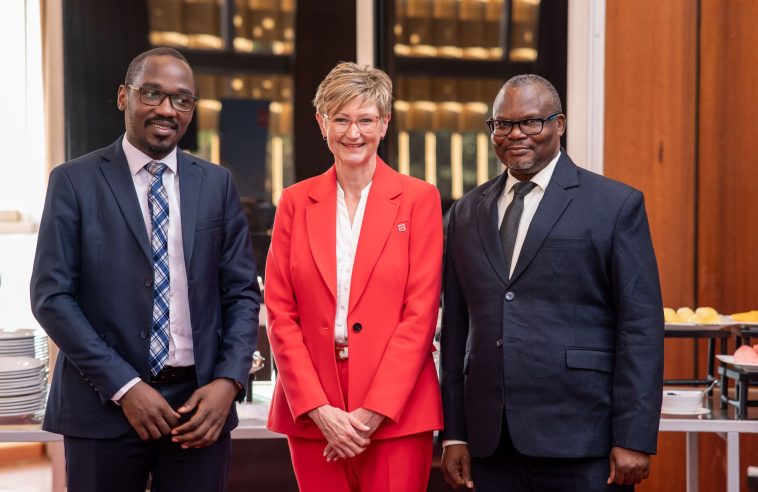
 Edgar Mukasa

I facilitated at the ACCA stakeholder’s round table under the theme “building sustainable value – from commitment to impact”.
For me, it’s the first time someone clearly contextualised the difference between ESG and Sustainability since the two terms are used interchangeably too often in recent boardroom conversations.
In the keynote speech by Melanie Proffitt, President, ACCA Governing council there is a lot of talk about climate change due to changing weather patterns when one looks outside the window, hence increasing attention to ESG. However, sustainability goes far beyond the environment.
The key learning points shared about sustainability include:
– Organisations should change the way things are done to ensure their continued existence in the long term.
– The measure of business success needs to include other outward-looking parameters beyond making profit such as the impact of the organisation’s operations on the community where they are operating.
– While the challenges attached to sustainability and implementation of policies in that regard are too many for anyone to solve, everyone can do something to make a difference.
A panel of distinguished professionals including: Derick Nkajja (CEO, Institute of Certified Public Accountants of Uganda), Patricia Ojangole (Managing Director, Uganda Development Bank), Joseph Ssekabira (Associate Director, Risk Advisory, Deloitte Uganda) moderated by Dorothy Kabagambe Ssemanda, (Chief Executive Officer, American Tower Corporation Uganda) followed to breakdown the sustainability conversation into adoption, commitment & impact and the key pointers shared include:
– Sustainability is a conversation that must be driven from the very top. Leadership of all organisations, including the board, needs to obtain an in-depth understanding of the subject to establish how their organisation tap into the opportunities and maximise impact.
– Sustainability is not just about the policies put in place by the organisation. It needs to be embedded in all operational decisions taken daily.
– It is important to strike a balance in decision-making as one tackles the sustainability agenda, depending on their level of readiness. For instance, a developing country like Uganda would not turn down the opportunity to exploit fossil fuels to spur its economic development.
– The Institute of Certified Public Accountants of Uganda (ICPAU) launched a road map of implementing sustainability reporting standards in September 2025 which positions Uganda among the early adopters of the global sustainability reporting framework.
As organisations pick up the sustainability conversation, a few hindrances remain, including that the systems in place currently are not robust enough to appropriately capture the relevant data and measure the corresponding impact, in addition to the capacity gap of the current workforce in ably handling this mandate.
This post was created with our nice and easy submission form. Create your post!

Written by
Edgar is an Associate Director in KPMG Uganda with over 13 years experience working as a tax advisor in KPMG.
Did this story move you? Every gift goes directly to Edgar Mukasa — writers on Muwado earn from reader appreciation, not algorithms. Even $1 makes a difference.






Muwado weekly chart
Get Africa’s top 10 stories every Thursday
No account needed — just your email.
Want to follow Edgar Mukasa and get notified every time they publish?
Create a free Muwado account →