

 Odimegwu Onwumere
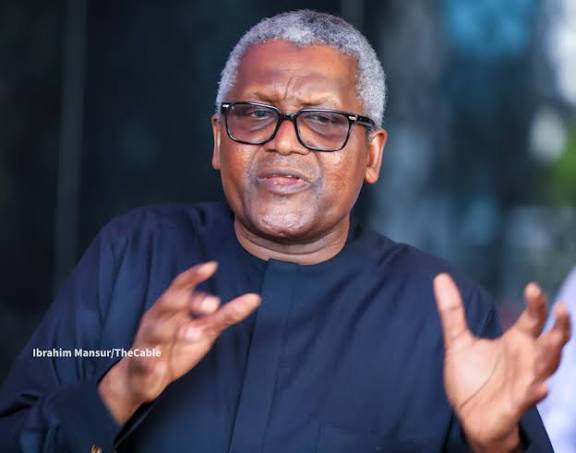
In a dramatic escalation of tensions in Nigeria’s oil sector, Aliko Dangote, Africa’s richest man, has openly accused regulators and oil unions of sabotaging his $20 billion refinery to protect a lucrative import cabal. Speaking at his Lagos facility, Dangote alleged that cheap, substandard fuel imports are being used to “checkmate domestic potential,” while claiming that theft and internal sabotage have cost his refinery $82 million, ODIMEGWU ONWUMERE examines. The feud has triggered a chaotic chain reaction. Retail fuel prices have crashed to their lowest levels in months as Dangote slashes gantry prices to edge out importers, but industry groups warn this relief may be short-lived. Simultaneously, powerful oil unions, PENGASSAN and NUPENG, have launched strikes, shutting down depots in Lagos and Port Harcourt over allegations that Dangote is blocking worker unionization. With accusations of “economic sabotage” flying and threats of a nationwide shutdown looming, the Nigerian government is scrambling to broker a peace deal in a conflict that threatens the nation’s energy security and economic stability.
It is a battle for the soul of Nigeria’s economy, fought not on a battlefield, but at the fuel pumps, in the boardrooms of regulators, and behind the closed gates of a $20 billion industrial fortress.
On Sunday, Aliko Dangote, the billionaire industrialist who bet his fortune on ending Nigeria’s dependence on imported fuel, escalated his war with the country’s oil establishment. Standing within the sprawling complex of his 650,000-barrel-per-day refinery in Lagos, Dangote did not mince words. He accused the Nigerian Midstream and Downstream Petroleum Regulatory Authority (NMDPRA) of enabling a flood of cheap, substandard fuel imports designed to cripple his refinery before it can fully stand.
“You don’t use imports to checkmate domestic potential,” Dangote told reporters, his voice edged with frustration. He painted a picture of a regulatory body working against the national interest, allegedly prioritizing the profits of foreign refiners and local importers over the country’s industrial independence.
This public outburst is the latest salvo in a high-stakes conflict that has turned the Nigerian downstream sector into a zone of open warfare. On one side stands Dangote, armed with the continent’s largest refinery and a promise to slash fuel prices. On the other sits a powerful coalition of regulators, importers, and now, labor unions, who view his dominance as a threat to their existence.
For the average Nigerian, this boardroom drama has had one immediate, tangible effect: fuel is getting cheaper.
In a move described by analysts as an aggressive market capture strategy, Dangote recently slashed his gantry fuel price from N828 to N699 per liter. The impact was seismic. Independent importers, whose ex-depot price stood at N824, were instantly undercut.
Retailers have been forced to respond. In Abuja, some filling stations reportedly crashed their pump prices to between N865 and N910 per liter, down from highs that had choked the economy. Dangote has vowed that Nigerians should not pay more than N740 per liter in the coming months, pledging to use his resources to force a correction in the market.
“We independent marketers are happy with him for his price slashes,” said Chinedu Ukadike, the spokesperson for the Independent Petroleum Marketers Association of Nigeria (IPMAN).
“He has told us that he’s ready to fight the oil cabals… we encourage him not to lose hope.”
But not everyone is celebrating. Billy Gillis-Harry, the President of the Petroleum Products Retail Outlets Owners Association of Nigeria (PETROAN), dismissed the price cuts as “Greek gifts” and “unsustainable.”
“If he wakes up and starts reducing prices, maybe he has a lot of money he wants to burn,” Gillis-Harry warned. He argued that artificially low prices could destabilize the market, driving competitors out of business and leaving Dangote with a monopoly. “Nigerians will suffer when the push comes to shove.”
While fighting a price war outside his gates, Dangote is fighting a different war inside them. On Sunday, he revealed that his refinery has lost a staggering $82 million to theft and internal sabotage.
The details are shocking. Workers have been caught tying cables to their bodies to smuggle them out. An operational boiler was sabotaged by an individual removing critical parts. Dangote claimed that these acts are not random theft, but a coordinated effort to force the refinery to file massive insurance claims, thereby spiking its premiums and operating costs.
“I challenge any one of the modular refineries to say that nothing was stolen,” he said, revealing that he now employs over 2,000 security personnel—more than his actual workforce—to guard the facility.
He also pointed a finger at the international oil companies (IOCs), accusing them of “willfully frustrating” his efforts to buy local crude by hiking prices above market rates, forcing him to import oil from as far away as the United States. This, coupled with the alleged importation of “dirty” fuel sanctioned by regulators, forms what Dangote describes as a “mafia” stronger than the drug cartels, determined to keep Nigeria dependent on imports.
As if the regulatory and market battles were not enough, a third front has opened with Nigeria’s powerful oil unions.
In September, the Petroleum and Natural Gas Senior Staff Association of Nigeria (PENGASSAN) and the Nigeria Union of Petroleum and Natural Gas Workers (NUPENG) shut down fuel depots in Lagos and Port Harcourt. Their grievance? They alleged that Dangote Refinery was s barring its workers from unionizing.
The strike paralyzed loading activities at major depots like NIPCO, Conoil, and Ardova. The unions also protested Dangote’s plan to deploy 4,000 CNG-powered trucks for direct distribution, a move that the Nigerian Association of Road Transport Owners (NARTO) claims will destroy the livelihoods of thousands of independent truckers.
“The plan to edge us out of distribution will not only destroy businesses but also threaten energy security,” warned Benneth Korie, President of the Natural Oil and Gas Suppliers Association (NOGASA).
“We have no other choice but to align with NUPENG.”
The unions have threatened a total shutdown of the refinery if their demands are not met, accusing the management of resisting all diplomatic efforts to allow workers to organize.
Caught in the middle is the Federal Government. President Bola Tinubu’s administration, which championed the “naira-for-crude” deal to support local refining, is now frantically trying to broker peace.
Meetings in Abuja involving the Minister of Labour, Muhammad Dingyadi, and the Minister of State for Petroleum, Heineken Lokpobiri, have so far ended in deadlocks. The government is acutely aware that a prolonged conflict could derail its economic recovery plans and send inflation spiraling again.
“The oil industry is not a sector that we play with,” Dingyadi pleaded during a tense meeting with union leaders.
“It is very important for the economy of our country and for our people.”
The conflict surrounding the Dangote Refinery is more than a business dispute; it is a reckoning for Nigeria’s oil sector.
For decades, a system of importation has enriched a select few while draining the nation’s foreign reserves and exporting jobs. Dangote’s entry has disrupted this equilibrium. His aggressive pricing is a boon for consumers but a death knell for the import cabal. His push for direct distribution promises efficiency but threatens the existing logistics chain.
Dangote calls his investment “too big to fail.” For Nigeria, the stakes are just as high. If the refinery succeeds, it could end the era of fuel scarcity and stabilize the naira. If it is strangled by sabotage and regulatory hostility, the country risks remaining trapped in a cycle of dependency.
As the unions dig in and the regulators trade accusations with the country’s biggest investor, the Nigerian public watches and waits, hoping that in this clash of titans, it is the price at the pump—and not the nation’s future—that ultimately falls.
•Onwumere is Chairman, Advocacy Network On Religious And Cultural Coexistence (ANORACC)
PIC credit: online
This post was created with our nice and easy submission form. Create your post!
Written by
Onwumere is Chairman, Advocacy Network On Religious And Cultural Coexistence (ANORACC)
Did this story move you? Every gift goes directly to Odimegwu Onwumere — writers on Muwado earn from reader appreciation, not algorithms. Even $1 makes a difference.




Muwado weekly chart
Get Africa’s top 10 stories every Thursday
No account needed — just your email.
Want to follow Odimegwu Onwumere and get notified every time they publish?
Create a free Muwado account →