

 Wanja Kavengi

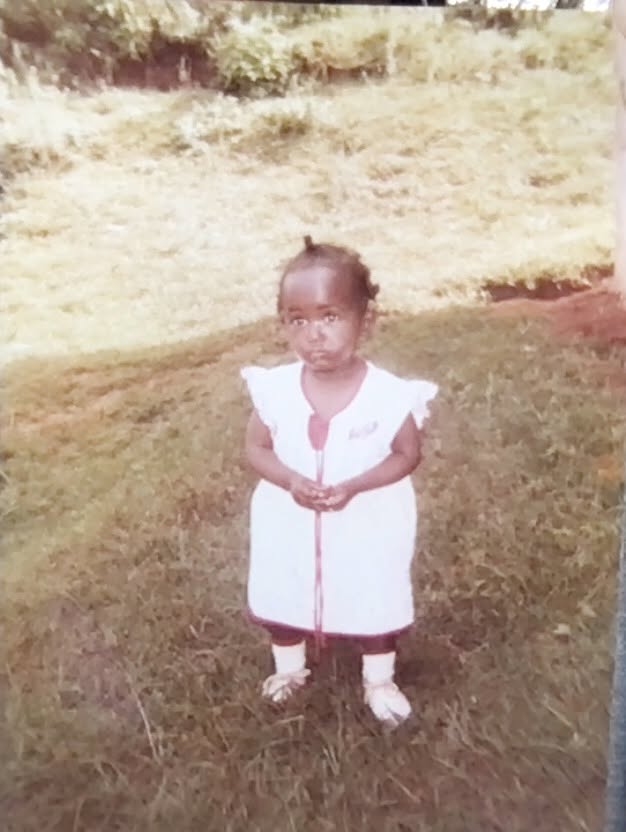
I came at around noon on a chilly Tuesday in June. Mother had known it was time, so she trekked slowly to Kyeni hospital and made a beeline for the maternity ward. She found her sister, Njeri, in the corridors cradling her three-month-old daughter. Njeri had lived three months in the maternity wing as a hostage, detained, restricted from going home because she had not, could not, pay the hospital bill. She had been forced to stay there after delivery, and her baby was growing slowly within the premises, a prisoner too. Alas, the very place that ushered in life refused to let it leave! And the longer she stayed the fatter the bill got, and her hope of ever leaving slimmer. Mother hadn’t known. It was their first meeting in a long time. But they did not have time to chat about the hospital food and baby names. Mother was in labour. I had grown too big for her womb, too bored of it, and I was clamouring to vacate her body and see the big, bad world. Her water broke, she was assisted to a bed, and after a push, I slipped out easily and quickly, and set my wet face upon this big, bad world for the very first time. I breathed the sharp hospital air for the very first time, and it must have stung my lungs for then I made sound for the very first time; an equally sharp wail that was evidence of my visceral aliveness, and perhaps my fright of the big, bad world.
Mother named me Pamela Wanja. But Pamela raised such a debate in my grandfather Kavengi’s homestead, where we lived. Uncles, aunts, cousins and other relatives discussed the name disapprovingly as they sat around the hearth drinking grandmother’s tea, and taking turns studying my ears and nose discreetly to confirm that I had indeed come from the right seed. Pamela was unfitting, they said. It was too Luo, they argued. Other names were suggested for me, and eventually everyone agreed that Jackline was more appropriate.
Thirty six Junes later, I no longer remember the dreams of my childhood, though I recall my defiance of it, my waywardness, my slight madness, which won me an admission to Chiromo Lane Medical Center when I was fifteen. My roommate at the facility was an antisocial sixteen-year-old girl who had attempted suicide. I developed a schoolgirl crush on a recovering alcoholic who trembled nonstop because of alcohol withdrawal. I was terrified of the manic woman who had to be carried off by the staff every time she got violent, and given injections to calm her down and make her sleep. I became friends with a young woman from Mombasa who had been taken in with depression after a suicide attempt because of marital problems. She was very generous with her digestive biscuits. I lied to my appointed therapist each session.
The psychiatrist who saw me had a startling revelation: I was a troubled child because of my father’s absence. And so he offered a solution: take her to her father. Father was summoned from Malindi to collect me from the madhouse on the day of my release. He carried my bag and we walked out of Chiromo in silence, though the silence wasn’t as loud as the disappointment I could feel radiating from him. It was not the first time I was embarrassing him. Nor would it be the last.
We rode in silence in a matatu, and I followed him to Kenyatta Hospital to see my uncle, Sam, who happened to be inside Cooperative House when the 1998 bomb blasted, and a shard of glass dropped from the sky and lodged itself inside his skull before he could escape fate. He had been in and out of surgery since then, removing some pieces of glass here and some pieces of glass there, and all that surgery and all those pieces of glass eventually made him a vegetable, and when he went into surgery a few weeks after our visit, he passed away on the operating table.
Anyway, I was taken to father when the year came to a close. Mother came home that evening and instructed me to pack my clothes quickly. She packed her favourite utensils. There was a seven o’clock bus to Malindi waiting for us at the Buscar office in town. The news was sudden, and for some months after that I thought mother to be cruel to have snatched me away from Githurai 44 so suddenly, without ever giving me an opportunity to say goodbye to my friends, and particularly to Steve, the form four boy from Parklands Boys High School with whom I was developing a sweet, innocent romance. He would invite me to his sister’s house where he would serve me biscuits and orange Quencher juice which he never diluted too much. He would play Boyz II Men, Joe, and Westlife, and he’d sing along for me, and I would sweat nervously and smile awkwardly wondering how in the world such a handsome and polite boy like him could ever like a girl like me. We had only met a few times. I spent most of my time later wondering if he wondered if the earth had swallowed me in the night, since he never saw me again.
We made it to Buscar on time. I sat on the floor because mother had only bought one seat, and the conductor was furious that I was a stowaway and wanted to kick us out. Mother pleaded with him the way mothers plead in a motherly way, looking for pity, until he halfheartedly agreed to let us stay with a stern warning. She had no money for two seats. I spent the entire journey curled on the floor by mother’s feet, feeling every rock the wheels rolled over, every pothole, every rumble of the engine, and every rattling of metal vibrating through my thin body, while thinking about Steve and the new place mother was taking me.
We arrived in the morning. Mother called to ask for directions. Father was waiting at the gate. And inside his house, another woman who had been sharing her life with him in Malindi, was waiting too.
I was born today. It is my birthday. But it’s not special. Because I’m born again every June.
This post was created with our nice and easy submission form. Create your post!
Did this story move you? Every gift goes directly to Wanja Kavengi — writers on Muwado earn from reader appreciation, not algorithms. Even $1 makes a difference.





Muwado weekly chart
Get Africa’s top 10 stories every Thursday
No account needed — just your email.
Want to follow Wanja Kavengi and get notified every time they publish?
Create a free Muwado account →